

This fall, the Grand Rapids Art Museum brings together three artists whose creative practices intersect with the American criminal justice system, exploring the ways art can preserve identity, foster resilience and challenge perceptions of incarceration.
Having opened on Oct. 3, the trio of exhibitions includes Julie Green: The Last Supper, Gary Tyler: Rebirth and Ray Materson: Metamorphosis. Though their approaches and experiences differ, all three artists demonstrate how commonplace materials can become powerful vehicles for storytelling.
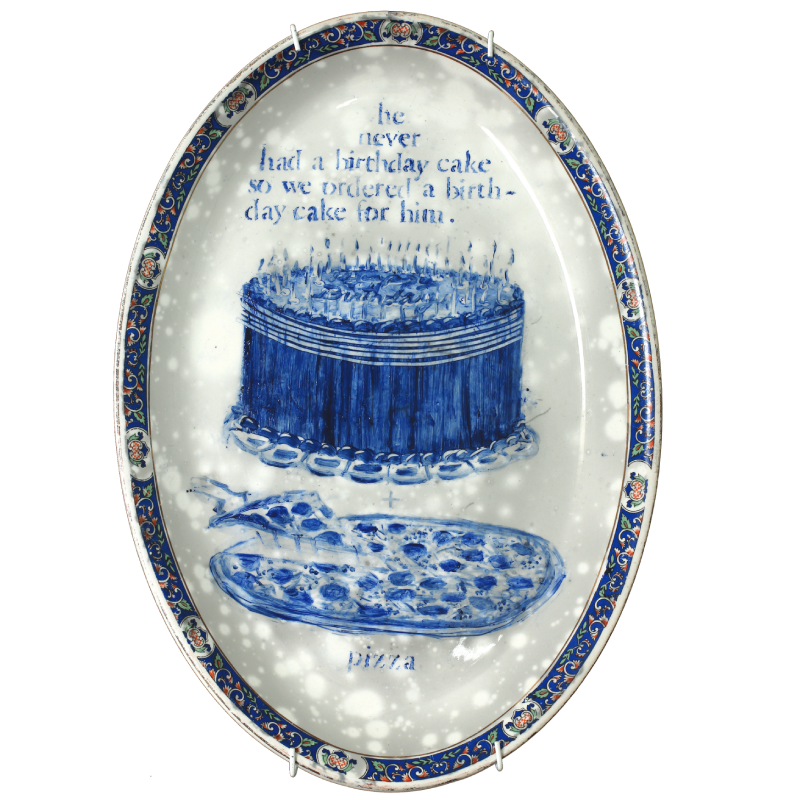
Julie Green, The Last Supper [Indiana 05 May 2007], 2007. Paint on found ceramic plates. 7 x 12 inches. Courtesy of Crystal Bridges Museum of American Art, Bentonville, Arkansas. Gift of The Last Supper Irrevocable Trust.
Green's The Last Supper is a monumental installation more than two decades in the making. Beginning in 1999, the artist painted the final meals requested by individuals executed on death row across the United States. Working on found ceramic plates, Green created nearly 1,000 small paintings depicting everything from hamburgers and birthday cake to lobster and cups of coffee. Rather than portraying the individuals themselves, the food offers glimpses of their lives, memories and regional identities. Green continued the project until her death in 2021.
The GRAM presentation, running through Oct. 24, 2027, marks only the second time a museum has exhibited the complete installation. Arranged across hundreds of plates, the work becomes a sprawling memorial and a meditation on the human lives behind capital punishment.
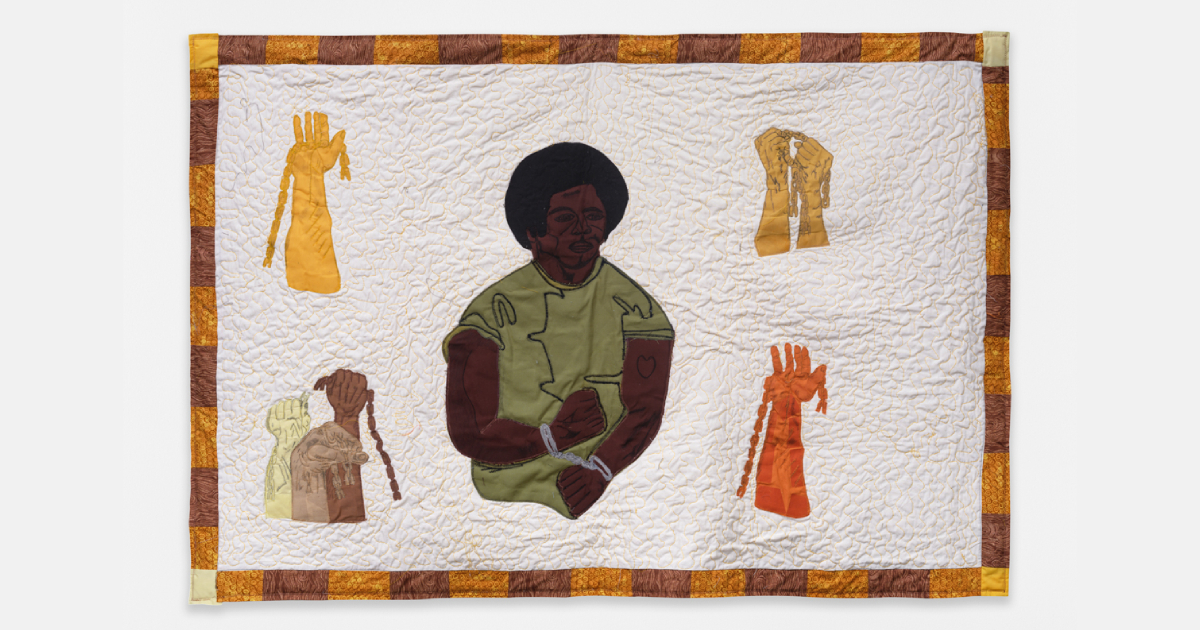
That theme takes on another dimension alongside Gary Tyler: Rebirth, the first major museum exhibition devoted to the textile artist. Arrested at age 16 and wrongfully convicted, Tyler spent more than four decades incarcerated in Louisiana, including time on death row. While imprisoned, he taught himself to quilt, initially creating work to support the Angola Hospice Program, which provides comfort to dying inmates.
Drawing on African American quilting traditions, Tyler's colorful compositions weave together family histories, Southern landscapes, animals, gardens and reflections on incarceration and freedom. Recent quilts and new commissions demonstrate an artistic practice that reaches well beyond the circumstances in which it began. Tyler also recognized several of the individuals memorialized in Green's The Last Supper from his own years behind bars, creating a particularly poignant connection between the two exhibitions.
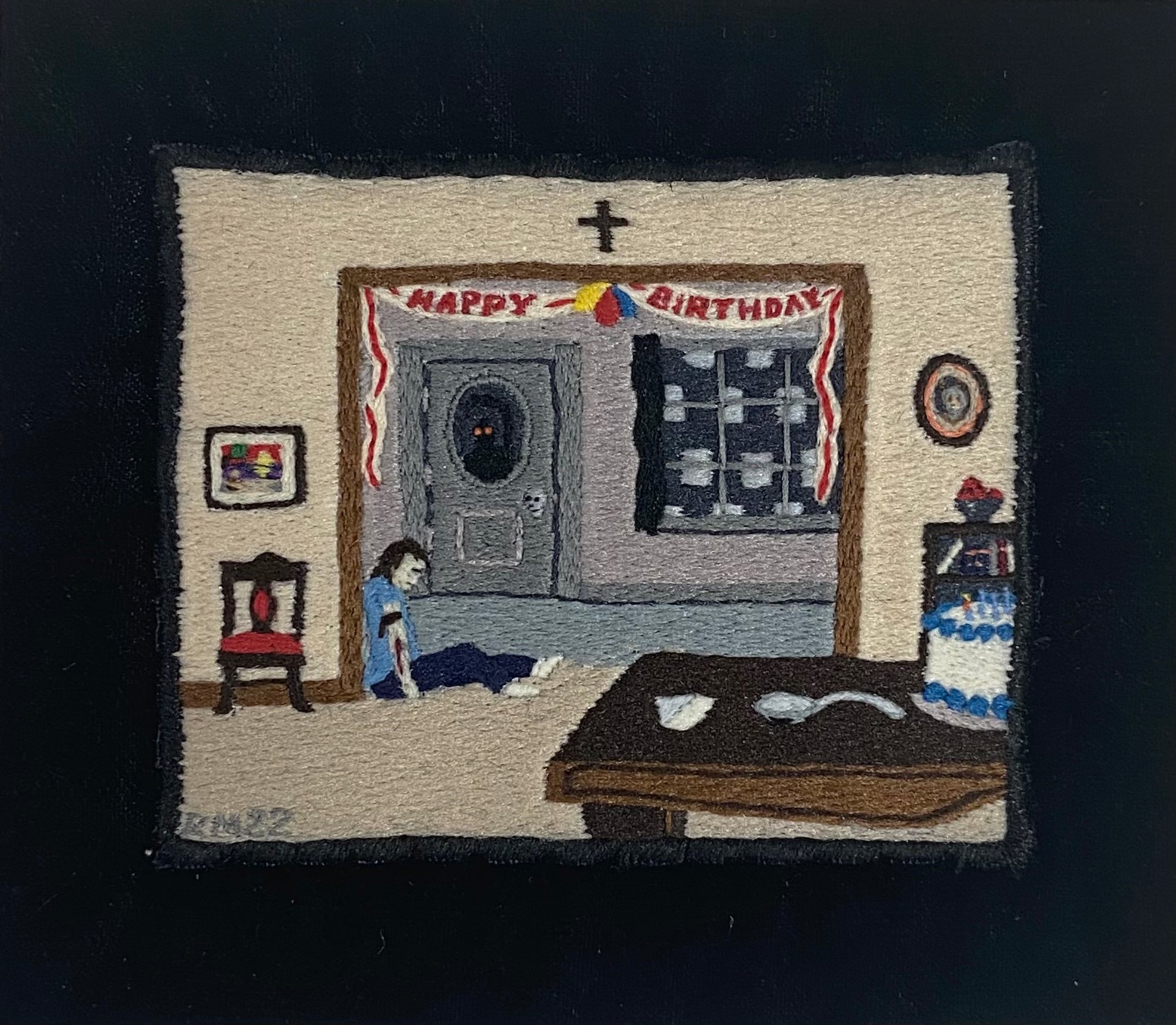
Ray Materson. Birthday Hot Shot, 2022. Sock threads. 2¼ x 3 inches. Courtesy of Diana Bowes.
The third exhibition, Ray Materson: Metamorphosis, turns to an entirely different textile technique. The Michigan artist began embroidering while serving a prison sentence in the late 1980s, developing an unconventional method of unraveling threads from ordinary socks and using them to create remarkably detailed miniature scenes.
Spanning more than three decades, the exhibition traces Materson's evolution from early works made during incarceration to recent pieces exploring literature, folklore, portraiture and Americana. His intricate compositions blur the boundaries between embroidery, painting and drawing, demonstrating the expressive possibilities of a material most people would overlook.
Presented as part of the GRAM's Michigan Artist Series, Metamorphosis offers the most comprehensive museum survey of Materson's work to date. Like Tyler's quilts, his embroideries reflect an artistic identity that has continued to grow far beyond its beginnings in prison.
Grand Rapids Art Museum
101 Monroe Center, Grand Rapids
artmuseumgr.org
Julie Green: The Last Supper, Oct. 3-24
Ray Materson: Metamorphosis, Oct. 3-Jan. 3
Gary Tyler: Rebirth, Oct. 3-Jan. 3
