
The 2025-2026 Grand Rapids Ballet season has been record breaking in its numbers of ticket subscribers, and it’s ending with a bang. In The Countenance of Kings is an exquisitely high-octane celebration of the present and future of ballet, according to Michigan’s only professional classical ballet company.
“We’re ending with a program that looks forward to the future of ballet,” said Artistic Director James Sofranko in his curtain speech opening night, acknowledging the contemporary influence shot through all the dances, especially that of the second act, a first for the company in performing the groundbreaking titular work. Created by New York City Ballet resident choreographer Justin Peck for The San Francisco Ballet in 2016, and set to Tony Award-winning Michigan native Sufjan Stevens’ The BQE, named for the Brooklyn-Queens Expressway, and originally made for film, this is only the third company to perform the piece, and it’s a revelation.
The score predated the ballet, and while Peck and Stevens didn’t work together, it’s a stunning collaboration, reminiscent of Jerome Robbins and Leonard Bernstein. Though the musicality of the movement is untethered by narrative, and the complexity of the horns- and strings-driven music in 7/8 time creates unique challenges for this incredibly athletic dance, it feels like it literally moves through the big, changing sounds.
The six principals and 12 corps members create exhilarating stage pictures with their bodies, from one large cluster of entangled limbs to bouncing solos to lyrical pas de deux in which the dancers fall down, elegantly, only to leap up and bound around again and again.
There are no lulls in this elegant high-speed chase that makes the most exhilarating gorgeous traffic patterns of bodies and shifting arm and leg lines accentuated by black tights (costumes courtesy of San Francisco Ballet) against light-colored marley, pas de deux, and solos in front of a line of spotlights facing the audience.
A playful false ending of all the dancers on their bellies facing the audience punctuates the incredibly joyful, youthful, contained chaos of this dance that often feels like the bright promise of a good morning.
A light, playfulness also begins Act I with a reprise of Plume, resident choreographer Penny Saunders’ 10th work for the company that premiered last year. It’s a wonderfully unusual dance with feathers set to circus-like music from Hugues Le Bars and Stephen Stubbs, that features 13 dancers in black leggings, bare tops, and black feathered collars against a blue cyclorama. They bop and pop and wiggle, some of them with feathers in their mouths.
The rest of Act I offers dances that recognize the complexity of romantic love, notably the world premiere of Artistic Director James Sofranko’s Yearning. Presented in three sections and set to recognizable Ray LaMontagne songs, the movement and music interplay to draw out the pain implicit in romantic partnerships; even amid the joy of connectedness there is suffering in its limitations.
There is chasing and catching, solos in square spotlights before a man and woman merge in duet: he lifts, hugs, then draws a circle with her body; and a grand third section that embodies the feeling of yearning with the three pairs who danced before joined by more than two dozen other dancers who look toward a horizon before they lift and gently spin Josué Justiz as LaMontagne sings “I can feel the Earth beneath me spinnin’ around.”
It’s an especially poignant moment given that this performance marks Justiz’s retirement from the company, which he joined in 2018, elevating so many dances and performances as an extraordinary soloist as well as with his excellent partnering work.
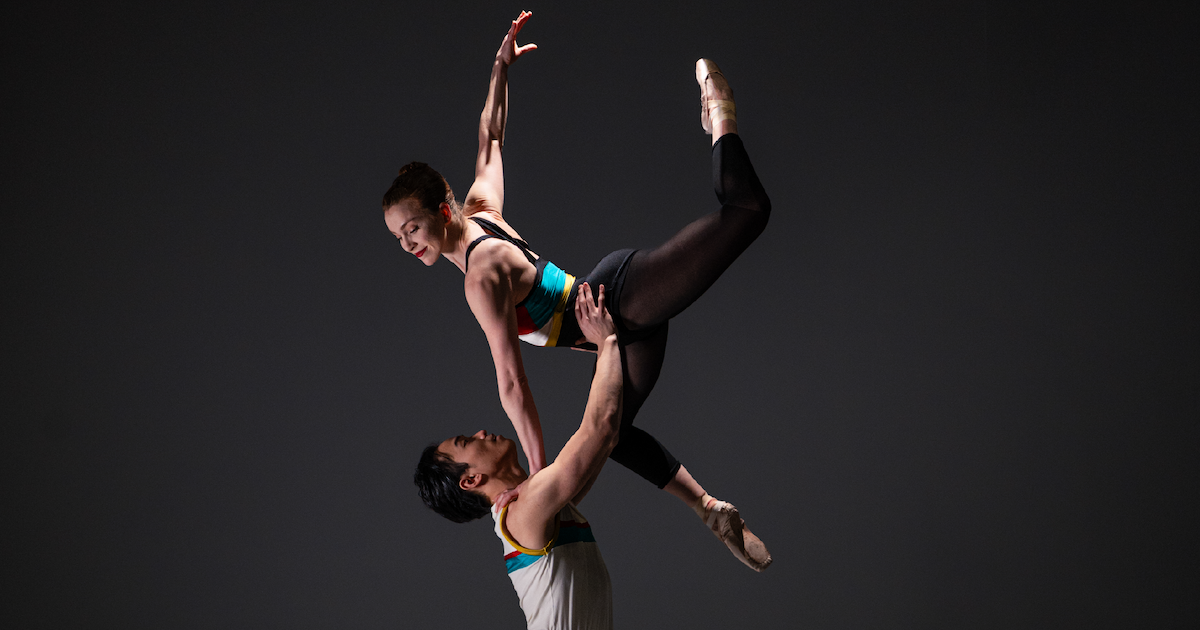
The other two dances of Act I are also incredibly beautiful. Dani Rowe’s For Pixie, set to Nina Simone’s devastating Wild is the Wind is a more modern pas de deux danced with incredible precision and expressivity by Emily Reed and Nathan Young. The piece begins and ends with her pumping arms like a runner, lit overhead; and amid the sweeping lovely dancing together, the dance contains small, gorgeous moments of surrender: he holds her by her chin, she leans her forehead against his shoulder with his hand at her waist. It’s gorgeous.
Another tender recognition of love is Lar Lubovitch’s “Duet from Concerto 622.” Considered “the most famous male duet in the international dance world” by The New York Times, this selection from a larger work created in 1985 honors the terrific love and loss of the AIDS crisis. Set to Mozart’s titular clarinet concerto, two men (Sam Epstein and Julian Gan on opening night, who also danced it together for the company in 2024) dressed in white chinos and white polo shirts create connected shapes with their bodies—looping hearts with outstretched arms and fingers touching, arms across shoulders walking lightly downstage—and, at turns, support each other with beautiful lines and offer dynamic solos.
If this program is a look ahead, we have much to look forward to. Solidly rooted in the extraordinary athleticism and technique required of classical ballet and changed over time, there’s recognition that interpretation of music and romanticism will ever be evolving with excellence.
If In The Countenance of Kings is any indication, the future of ballet is in very good hands with Grand Rapids Ballet.
In The Countenance of Kings
Grand Rapids Ballet
Apr. 24-May 3
grballet.com