
Get Out is Your Monthly Guide to What’s Great in the Great Outdoors.
I can’t remember exactly what I was doing. Maybe it was climbing into a raft to go winter paddling. Or hiking up a steep hill. Or easing myself into a kayak. But whatever activity it was, when I got home, I realized that a lot of what I write about in this column isn’t accessible to everyone.
It really hit me that I take so much for granted. Not just in recreation, but in everyday life: maneuvering spaces that only have stairs, getting around in a cramped store, reading instructions in eight-point type. I’m not a person without limitations, but I can do most things with a hand here and a lift there.
When you don’t have firsthand experiences, it can be hard to know where to begin to learn what life is like for those who may not have the same capabilities as you do. I know, for example, that Muskegon Luge Adventure Sports Park has a pretty robust adaptive sports and universal accessibility undertaking. But I don’t really know all of what that means. Sooo… I asked.
The first person I thought of was my friend Nicholette Driggs, CAPS (Certified Aging-in-Place Specialist). For the last two years, she’s been working for Disability Advocates of Kent County as their “Absolutely Accessible Kent” program’s Business Development Coordinator. I’m not shy about telling you that she’s also a certified badass. Over the years I’ve known her, she has been an advocate not just for herself, but for the broader community in the areas of body positivity, mobility, invisible illness, and broken systems.
Nicholette enthusiastically agreed to chat with me, so I met up with her at her home base located within the Special Olympics Michigan Unified Sports & Inclusion Center off 68th Street in Cutlerville. This massive space was once the South Christian High School campus, and it’s really ideal for supporting their initiatives, as well as other organizations who have offices in the building, including Thresholds, be nice., Autism Alliance of Michigan, and Deaf and Hard of Hearing Services, to name a few.
I really wanted to talk about places and/or organizations that are working to ensure they’re accommodating persons with disabilities, but our conversation really bloomed into something much bigger and better.
We talked about language, specifically noting that person-first identification (e.g., person with a disability) is often preferred, though ultimately up to the individual. That words like “handicapped” are outdated, and “accessible” is a superior descriptor than “disabled” in parking, bathrooms, and other instances. Oh, and also that wheelchairs are devices for mobility and freedom, not something people are bound to. So many things I’ve never really thought about!
She also noted that 27% of adults in the U.S. have a disability and, therefore, it really affects everyone—especially when considering events that a whole family or group of friends want to attend, but lack of community planning excludes one or more of them.
I really felt this excerpt from a post Nicholette wrote last year, so I thought I’d share it here, with her permission:
“Disability is the largest minority group in the world, that you can join at any time—yet stigma continues to shape how people are treated, included, or overlooked.
Stigma shows up quietly: in assumptions, in lowered expectations, in inaccessible systems. And sometimes it shows up loudly—in the language people use.
Accessibility isn’t extra.
Belonging isn’t accidental.
And the words we choose can either reinforce stigma—or dismantle it.”
See what I mean? Badass.
In short, accessibility shouldn’t be an afterthought. Builders, planners, and organizations should be considering it from the beginning, not fixing it later. And, with that in mind, let’s talk about some of those who are putting in the work.
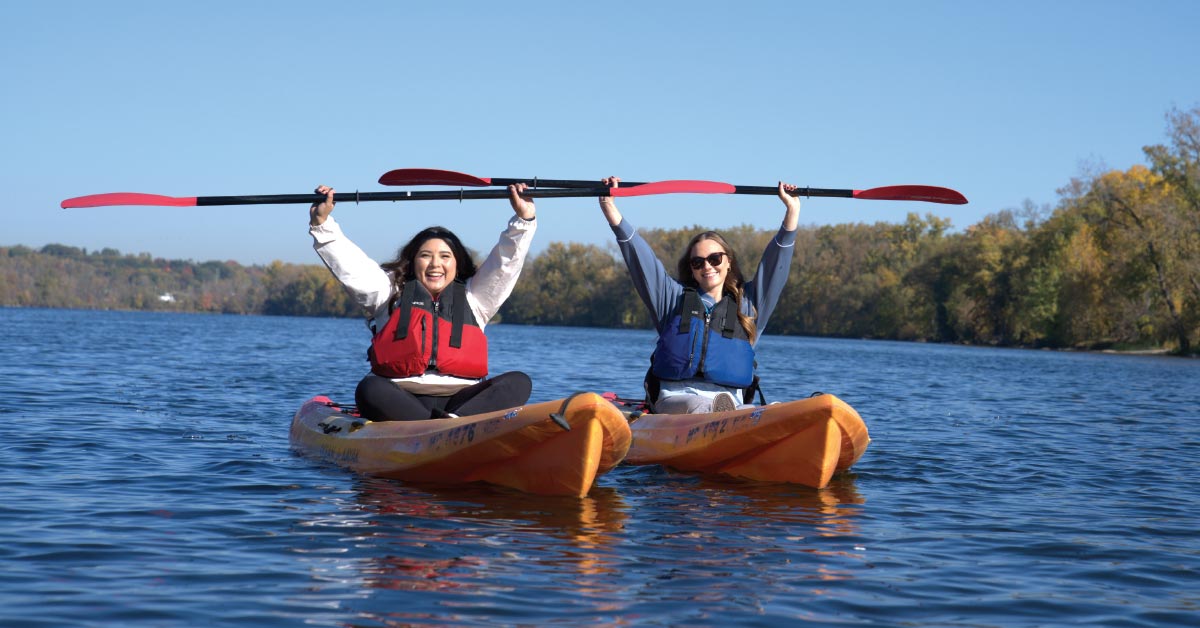
I mentioned Muskegon Luge Adventure Sports Park earlier, which is out of purview of Disability Advocates of Kent County, but a good example. In greater Grand Rapids, the City of Kentwood has instituted their IDEA (inclusion, diversity, equity, and accessibility) policy, resulting in the availability of a range of outdoor accessible activities, such as adaptive kayaking, cycling, and pickleball, as well as barrier-free trails, classes, and more.
In addition to the City of Kentwood, the City of Grand Rapids, Friends of Grand Rapids Parks, Experience Grand Rapids, and Downtown Grand Rapids, Inc. have also collaborated with Disability Advocates to invest in and improve accessibility in public spaces.
Perhaps most exciting is that Experience Grand Rapids, in partnership with Wheel the World, has developed an AI tool to help tourists and residents alike make their travel and entertainment plans in Kent County with confidence. It offers detailed accessibility information for attractions, activities, restaurants, hotels, and transportation, allowing for more certainty in otherwise often unpredictable circumstances.
You can find it at: experiencegr.com/plan-and-stay/trip-planning/accessibility, and learn more about Disability Advocates at dakc.us.