
If there’s one thing Hell’s Kitchen does incredibly well it’s remind us what an extraordinarily gifted songwriter Alicia Keys is.
The national tour of this semi-biographical Tony Award winning jukebox musical kicked off Broadway Grand Rapids’ new season at DeVos last night. It’s a tremendous mishmash in terms of storytelling and style, a celebration of New York, Black culture, mothers and daughters, and the power of music that comes to life through the hits and deep cuts of Keyes’ impressive discography through a story loosely based on a short period of time inspired by her own life.
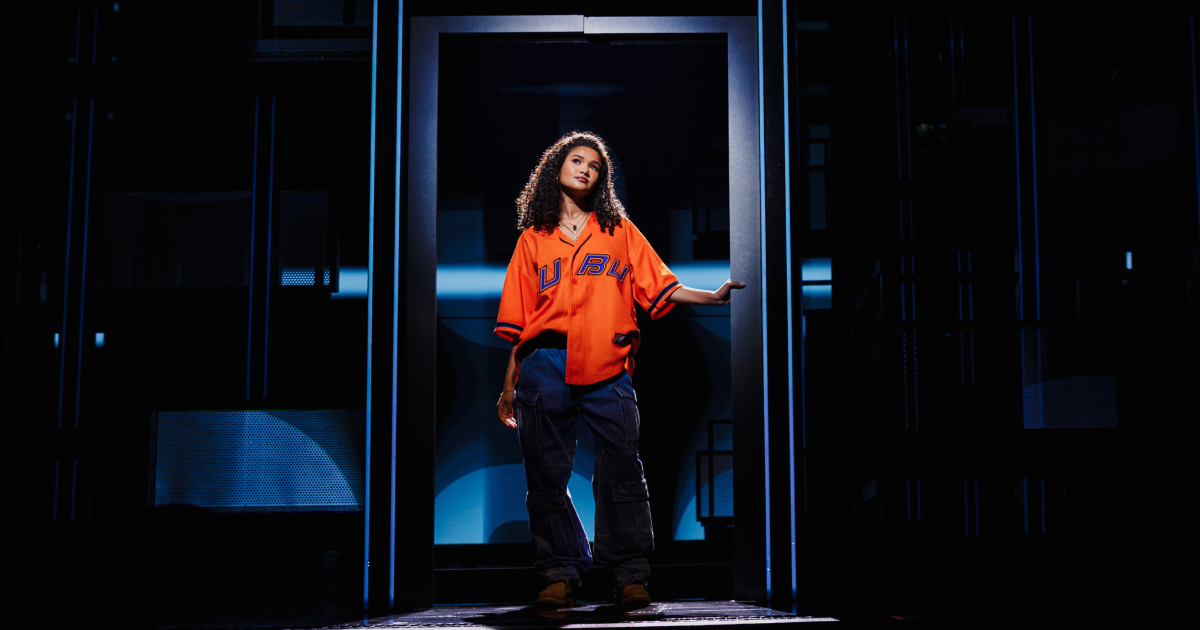
Directed by Michael Greif, with book by Kristoffer Diaz and music and lyrics by Alicia Keys, the story is set in 1990s Manhattan, and focuses on Ali, a 17 year old who longs to get out from under her overprotective mother’s thumb and explore the grand city down the elevator and out the door of the subsidized artists’ high rise where they live. She defies Jersey, her single mom, and falls for Knuck, a 24-year-old bucket drummer and commercial painter.
The first act seems like a love story until Ali encounters Miss Liza Jane, an extraordinary pianist who becomes her mentor, teaching her how to play, how to channel her emotion into art, how to honor her ancestors with her artistry.
Hell’s Kitchen wends its way through the love story, Ali’s coming of age as an artist, and her struggles to connect with her absent father, but all those threads are secondary to the true narrative arc, which is ultimately about the tumultuous, enduring love between mother and daughter.
The translation and adaptation of Keyes’ songs, often into duets that differ in style and interpretation from the original hits, is a strength of the show. “Fallin’” becomes a jazzy duet between Ali’s estranged parents; “No One” is a gorgeous anthem, a duet between a mother and daughter united.
At other times, fitting existing songs into the narrative stretches theme beyond what can be comfortably contained in a two-act musical. Roz White as Miss Liza Jane gives a powerful performance of “Perfect Way to Die” as the Act I closer, but its meaning isn’t entirely clear; “The River” brings up the Hudson as a point of longing to escape for Ali, but New York as a character fades into the background until “Empire State of Mind” closes the show. It’s a big, crowd-pleasing ensemble number, but it pales in comparison to the original arrangement.
And the most effective, biggest, brightest number is “Kaleidoscope”, a song written expressly for the musical. But all of the music sounds terrific thanks to a fine orchestra under music direction from Emily Orr.
Robert Brill’s industrial set design, with floor to ceiling, rolling, metal set pieces allow for quick scene changes with effective lighting design from Natasha Katz.
Small scenes are juxtaposed with plenty of big ensemble number where no fewer than 15 extraordinary dancers dressed in baggy 90s jeans and crop tops designed by Dede Ayite criss cross, sway, breakdance, clap in succession, twerk, layout, and do the running man, among other hip hop moves, creating utterly joyful street scenes and a strong sense of community.
And virtuoso performances abound. Maya Drake has a lovely voice and verisimilitude as a goofy, free-spirited teenager. She and Kennedy Caughell create the complexity and passion of a single mother, only daughter relationship, and Caughell’s range and vocal power are utterly astounding. In many ways, she is the star of the show: this girl is on fire.
Desmond Sean Ellington is a charming and heartbreaking Davis; Jonavery Worrell is wonderful as Knuck; and Roz White is a phenomenal Miss Liza Jane, full of gravitas and love.
In fact, every performer on stage is remarkable; this is a solid cast performing excellent songs with a profound depth of emotion—often making you hear them anew—and creating visual delights with their exquisite dancing.
As is so often the case in jukebox musicals, the story is is just something to hang the songs on, and while this one has many moving parts, it still makes for a terrific way to experience Alicia Keys’ rich body of work.
Hell's Kitchen
Broadway Grand Rapids
DeVos Performance Hall
Sep. 15-20
grandrapids.broadway.com