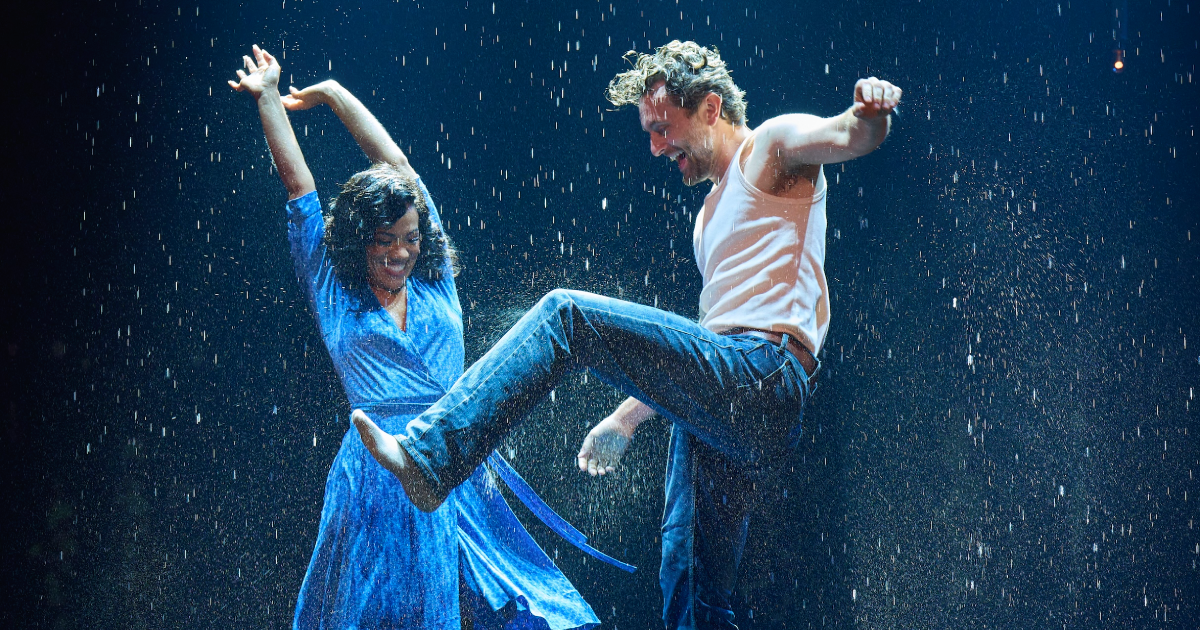

Grand Rapids Ballet’s 2026-2027 season opener Broken Wings pairs two imaginative short ballets, each inspired by iconic figures whose lives were shaped by physical disability.
The titular piece that opened the show is a colorful, surrealist narrative, a lyrical biography of perhaps the most famous 20th century painter, Frida Kahlo, pairing moving images drawn from her paintings with key moments from her life. The other ballet, Dreamers, is more abstract in its telling, and centers on astrophysicist Stephen Hawking’s life of the mind.
Yet in this pairing, Broken Wings moves beyond a mere illustration of “triumph over disability” and asks a larger question through the artistry of its form—dance itself—of what the imagination can make of a body that is both an instrument and a constraint.
Belgian choreographer Annabelle Lopez Ochoa’s Broken Wings was originally created in 2015 for the English National Ballet, and it has been staged by major companies including the San Francisco Ballet, Houston Ballet, The Joffrey Ballet, and now Grand Rapids Ballet.
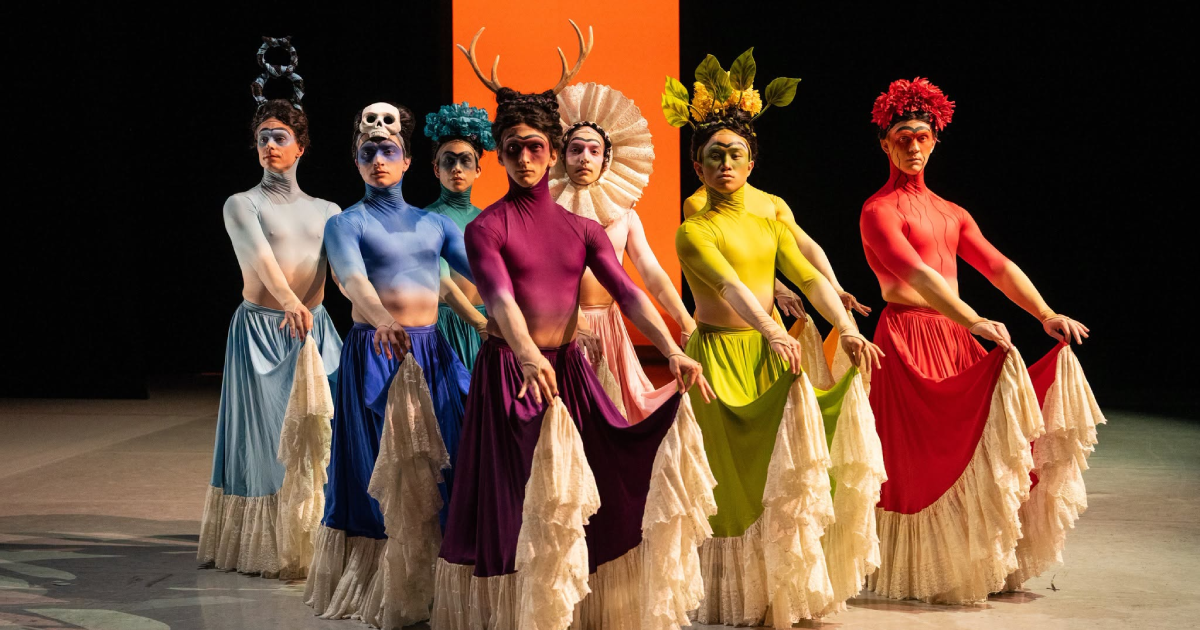
This exquisite ballet seems to locate imagination in Kahlo’s body and then explode it outward. Her pain, sexuality, gender, mortality, Mexican identity, and artistic self-invention all become theatrical material.
Most notably, an interplay between two corps de ballet—skeletons topped with calaveras make death a constant dance partner, and a group of wonderfully surreal male embodiments of Kahlo’s self-portraits, with costumes and head pieces designed by Dieuweke van Reij— coexists with folk rhythms (music by Peter Salem), saturated color, humor, sensuality, and shows the constant forces of life and death at work. Rena Takahasi danced a glorious Kahlo in the Oct. 23rd performance, showing that her body may be vulnerable, but the world issuing from it is extravagantly alive.
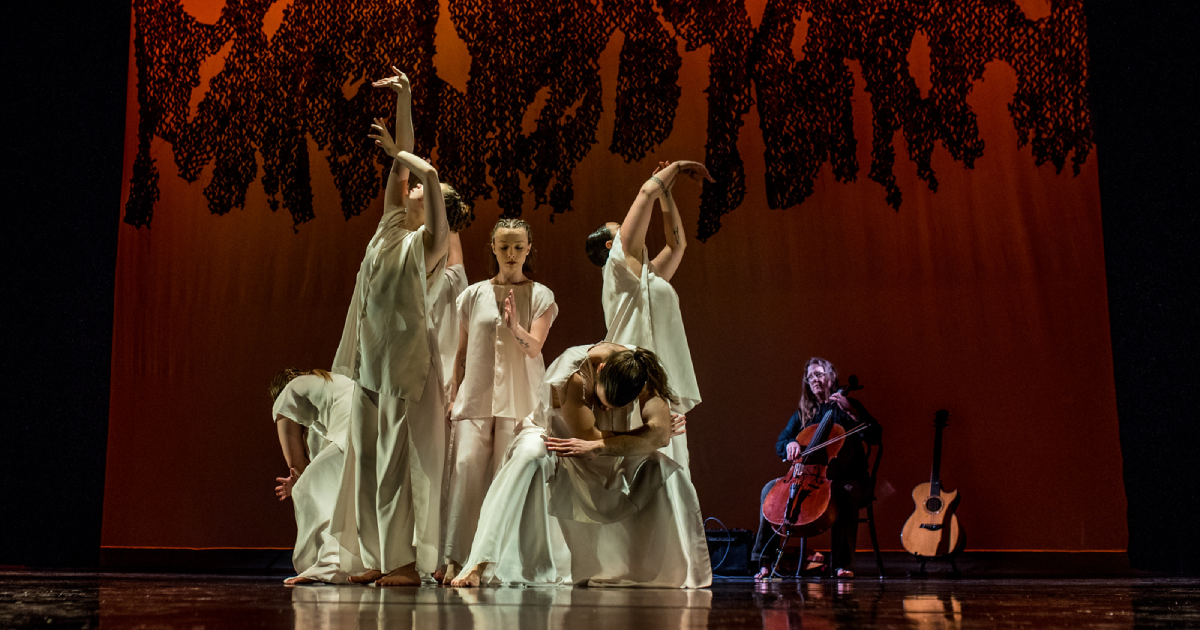
Grand Rapids Ballet’s Artistic Director James Sofranko’s “A Dreamer”, by contrast, translates Stephen Hawking’s imaginative life through abstraction rather than theatrical spectacle. A reprise from Grand Rapids Ballet’s 2020 program Eternal Desire, the ballet features crisp musicality (with a distinct shift from the score split between Philip Glass and Beethoven), athleticism, pointe work, and shifting pas de deux, that suggest a mind moving beyond the body’s increasingly severe restrictions.
Nine dancers defined by clean lines repeat the motif of grand jêtés that appear to effortlessly float and hang mid air. So much of their dancing is perfectly symmetrical and in tandem. And moments in the piece give just enough narrative grounding to the abstraction that abounds: the central dancer playing Hawking (Julian Gan on Oct. 23) falls; he attempts to enter partnerships that become pas de trois, as though the ordinary duet is no longer available to him; and a gorgeous tableau, a constellation-like arrangement of couples who look like stars, in which individual bodies become part of a larger cosmic pattern.
Hawking’s imagination expands through musical structure, spatial pattern and the cool radiance of the cosmos; Kahlo’s blooms outward in color, costume, character and folklore.
Broken Wings and Dreamers ultimately resist becoming matching tales of heroic transcendence.
One ballet looks inward and finds a riot of life; the other looks outward and finds the stars. Together, in Grand Rapids Ballet’s wonderful opening program of the season, they suggest not that imagination escapes the body, but that it makes the body signify beyond its apparent limits.
Broken Wings
Grand Rapids Ballet
Oct. 16-25
grballet.com